
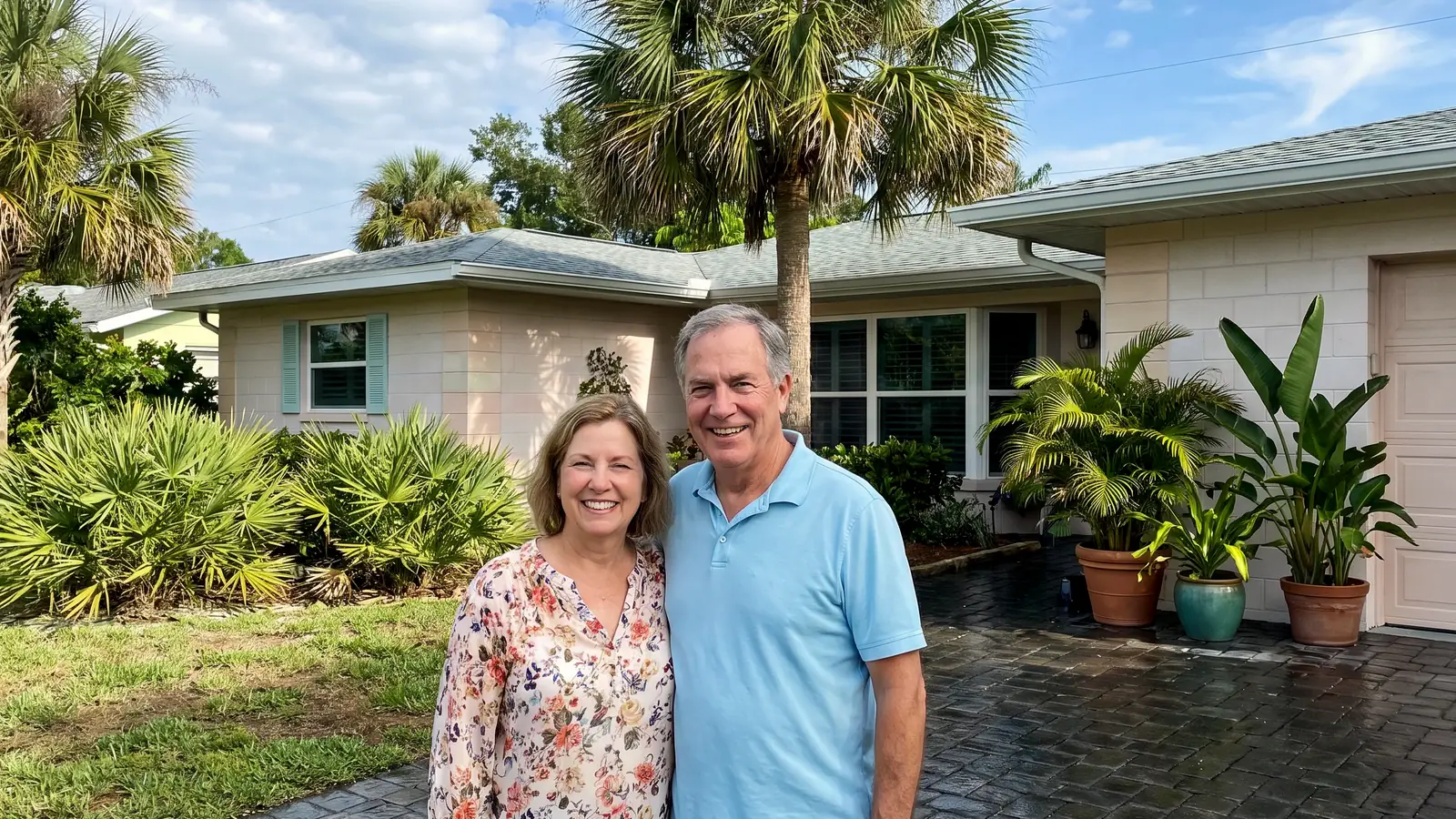
Paver sealing for Hudson homes
Paver Sealing in Hudson, FL
Gulf breezes and canal humidity wear on Hudson pavers, so call (352) 820-2319 for a free sealing estimate.
- Brings out deeper paver color
- Fresh joint sand helps lock pavers in place
- Gives weeds less room to grow
- Makes the surface easier to keep clean
- Free estimate, no obligation
Request a Free Estimate
Free, no obligation.
Fast, careful paver sealing in Hudson
Paver sealing is available in Hudson, from the canal streets near Hudson Beach to the newer homes inland. A local contractor washes the pavers, refills the joints and seals driveways, lanais and walkways, with no charge for the estimate. Call (352) 820-2319 and look for an answer inside 1 business day, usually much sooner than that.
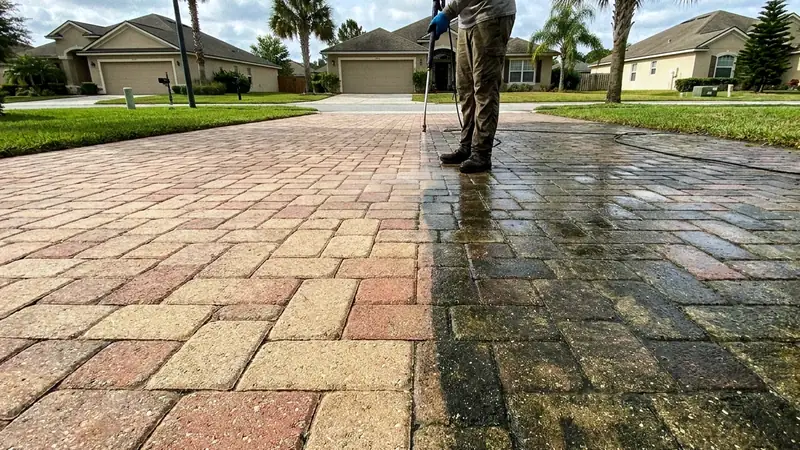
Picture a driveway gone chalky and dull, with moss in the joints along the edge. After a wash, new sand and a fresh coat, the color comes back even and clean. Prefer a short note first? ask for a free estimate, and describe the spot that bothers you most.
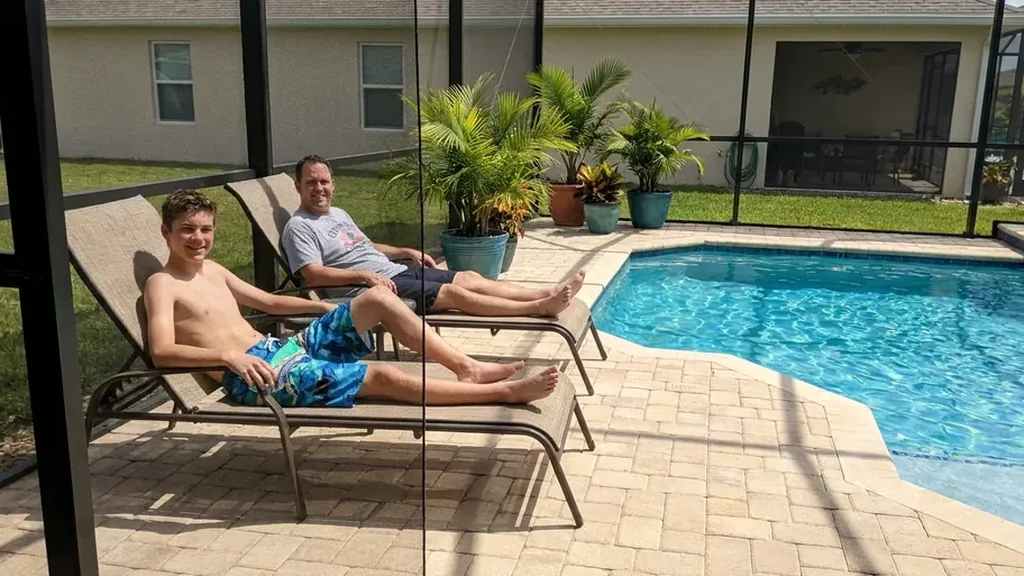
Why hire a local paver sealing contractor in Hudson?
Hudson homeowners lean on a local contractor because canal water, a high water table and Gulf humidity all change how a coat holds up. ask for a free estimate, and hear how all this applies to your street.
A free look, no pressure
At no charge, a contractor looks over the driveway, lanai and walkway at your Hudson home. You hear a price before you agree to anything.
A published price range
Around Tampa Bay the going range is $1 to $3 per square foot for the wash, sand and seal. Hold any Hudson bid up to that range.
Matte or wet look
Matte hides scuffs from cars and boat trailers. Wet look adds shine and also shows scuffs earlier, so choose the finish you will enjoy more.
You make the call
You pick the date and the finish. A Hudson estimate carries no obligation, and you can say no at any point.
Get Your Free Estimate in Hudson
Tell us about your pavers in Hudson.
Free, no obligation
What paver problems show up most in Hudson?
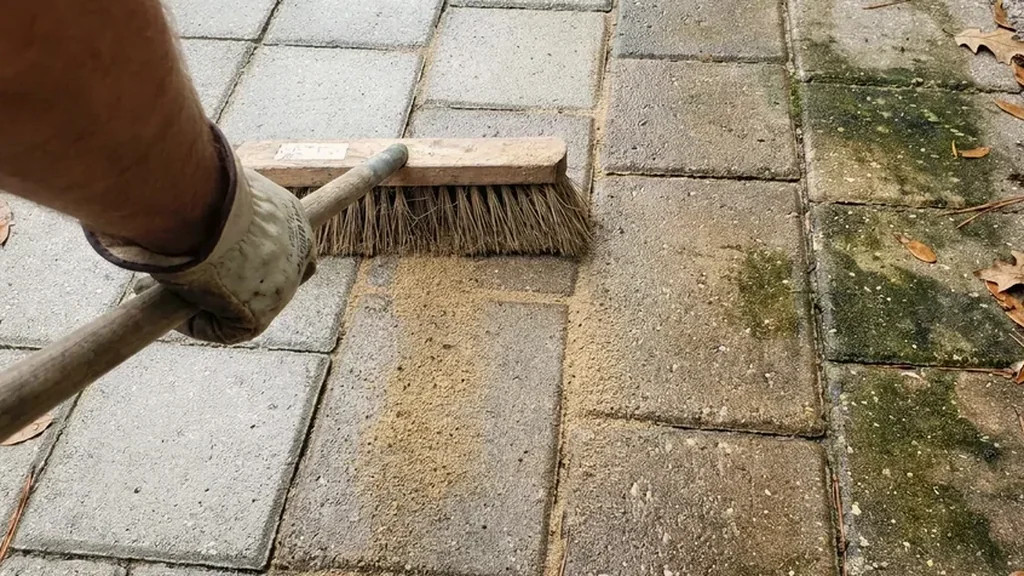
Damp Gulf air and green film
Hudson sits at the western edge of Pasco County, and its low elevation and the Gulf shape its climate. Warm, damp air keeps shaded pavers wet for longer, and wet pavers grow a green film. You may notice it first on the shady side of the driveway, where the sun never quite dries things out. Sealer put over that film would trap it, which means the wash has to come first. A Tampa Bay paver company also says Gulf-front homes face heavier salt air, which can shorten the time between coats. Closer to the water, plan on checking the finish a little sooner.
Low ground near the canals
Hudson Beach has more than 25 miles of canals, and many backyards back onto the water. Those canals were blasted out by the Army Corps of Engineers in the late 1950s and through the 1960s. In Pasco County, soil maps put groundwater less than two feet down on 61 percent of the land. On a lot like that, a paver base stays soft, and low spots can hold a puddle after rain. Low areas are repaired first, because sealer would simply freeze a dip in place. A level surface also sheds water better, which helps the sealer last.
Rust spots from sprinkler water
UF/IFAS reports that iron is common in Florida well water. When sprinklers use that water, orange streaks show up on whatever it hits, and pavers are no exception. If your Hudson lot runs sprinklers off a well, tell the contractor. The stains often line up with the sprinkler heads, which makes the cause easy to spot. Rust is treated during the wash, because sealer over a stain makes it permanent. A before and after photo of the spot helps you judge the work.
Joint sand that washes away
Most of Pasco County sits on loose sand. The most common county soil, Tavares, is a sand that holds almost no water. The National Weather Service puts the rainy season for west central Florida at May 25 to October 10, with daily storms in the middle of it. One bay-area paver company links near-daily storms to faster joint sand loss. Once joints open up, weeds move in and the pavers start to shift. Fresh sand and a coat of sealer help hold the joints steady between storms.
A coat from a past owner
Hudson homes range from ground raised around 1950 in Port of Hudson to larger canal homes built from the 1980s on. The housing stock is a mix, and so are the pavers. Pavers on an older lot may have been sealed more than once by different owners. Water-based products do not bond over solvent-based coats, so the old product matters. The contractor checks what is already down before choosing a product. If nobody knows, a small test spot usually tells the story.
Do canal homes in Hudson Beach need different paver care than inland streets?
Yes, because canal lots deal with more water, more humidity and often more shade than lots inland. Hudson Beach runs from Sea Pines in the north to Signal Cove in the south. Between them sit Driftwood Isles, Cape Cay, Sunset Estates, Waterway Shores, Port Hudson, Hudson Beach Estates and Sea Ranch. ask for a free estimate and give the name of your canal street.
Port of Hudson started around 1950, when a man named Hendry dug inlets and used the fill to raise ground for a few houses. Larger homes, mostly mobile homes, followed along the canals in the 1980s. A lot that has changed hands several times may carry old sealer or patched joints. Call (352) 820-2319 and say about when your house went up.
Inland, Hudson has three golf clubs: Beacon Woods, Meadow Oaks and Heritage Pines. If you live in a golf community, ask your association about exterior rules before the job day. About 39 percent of residents are 65 or older, so lanais and entry walks get daily use. To plan a quiet, careful job around your routine, ask for a free estimate.
What does paver sealing cost in Hudson?
Published prices around Tampa Bay come to $1 to $3 per square foot, covering the wash, the sand and the sealer. Where a Hudson job lands in that range depends on shade growth, lost joint sand and old sealer. Lanais and walkways are measured with the driveway, so more square feet means a higher total. For a figure on your lot, ask for a free estimate and ask for the free estimate.
Access shifts the price too. A wide open driveway is simpler than a tight canal-side courtyard where hoses and gear get carried by hand. Pavers that sank or tilted need repair before sealing, which adds time, and edges near a seawall or garden bed can slow the work. A quick call to (352) 820-2319 sorts out which of these fit your property.
| Paved area | Typical example | Clean, sand and seal |
|---|---|---|
| 300 sq ft | Small patio or walkway | $300 to $900 |
| 600 sq ft | Two car driveway | $600 to $1,800 |
| 1,000 sq ft | Large driveway or pool deck | $1,000 to $3,000 |
| 1,500 sq ft | Driveway plus pool deck | $1,500 to $4,500 |
Math based on the $1.00 to $3.00 per square foot that Tampa Bay paver companies publish. Your contractor sets the actual price after seeing the surface. Repairs, leveling and stripping failed sealer are usually extra.
How does a paver sealing job work in Hudson?
Look over the lot and the old coat
First stop is a slow lap of your Hudson lot to see where water collects and where shade stays heavy. You can point out the spots you worry about, and they go on the estimate. Sunken or tilted pavers are marked for repair. If the surface was sealed before, the contractor needs the product name, because a solvent-based coat rules out a water-based topcoat. Tell the contractor if sprinklers run off a well, and point out any area that stays soggy after rain. Those two details change the plan more than anything else.
Wash off the green film and grime
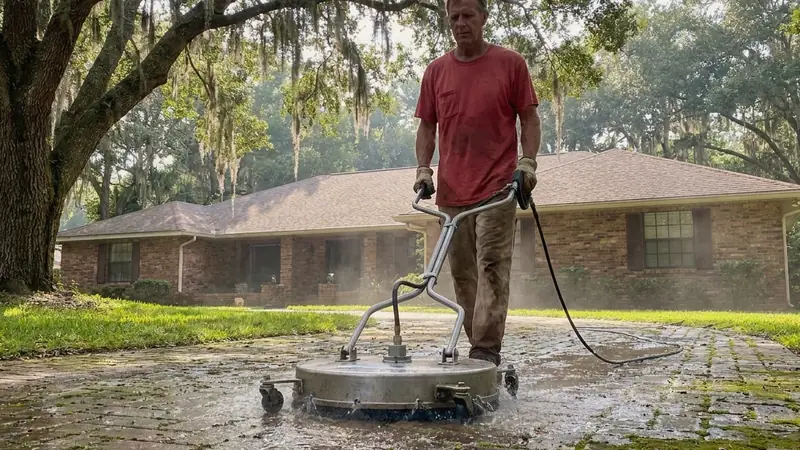
Cleaning comes next, aimed at green film, rust and the dull gray that builds up in damp air. Walkways, steps and the edge by the garage get the same attention as the driveway. Stains are treated at this stage. Rinse water is kept away from screens, shrubs and any gear near the water. Pulling sand out of the joints is a side effect of washing, and the next step fixes it. The goal is a clean, bare paver, not a rushed rinse.
Put fresh sand back in the joints
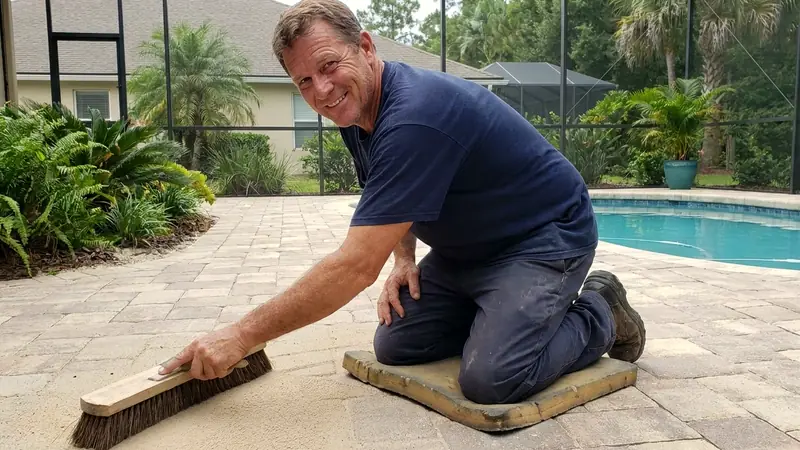
The wash takes the joint sand with it, so new sand goes in before any sealer. On the loose sand common across Pasco County, open joints let weeds in and let pavers drift. The joints are filled, swept and checked. If sand was low for years, this step takes longer. Full joints also keep the sealer from sinking into gaps and leaving thin, patchy spots.
Wait for a dry surface
A coat goes on dry surfaces only, since wet pavers hold water beneath it. Shaded canal lots dry slowly, and afternoon storms can interrupt a summer day. A careful contractor waits for the pavers to dry and watches the sky. That wait is what protects the finish. A coat sealed over moisture can turn cloudy, and the only fix is stripping it off.
Apply sealer and set the keep-off time
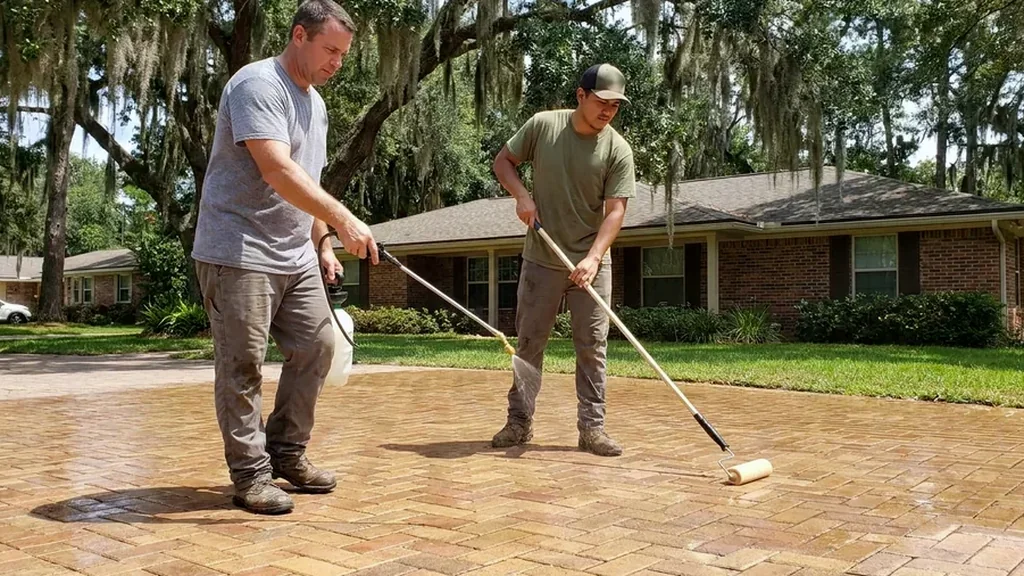
Sealer is often sprayed on, and a roller follows to level out extra product. This pushes sealer into the joints and keeps puddles from drying into shiny patches. The contractor applies it in the finish you chose, matte or wet look. You are told when it is safe to walk on the pavers and when cars can return. The coat goes on in thin, even passes, and the contractor checks the edges where pavers meet the lawn, the garage and the pool deck.
Complete paver services in Hudson
A Hudson job runs in four steps: wash, re-sand, dry and seal. The wash lifts green film and grime, and fresh sand goes into the joints. Sealer goes down last so nothing dirty gets locked under it. To ask how long each step takes on your lot, call (352) 820-2319.
Driveways take tires and, for some homes, a boat trailer. Lanais and pool decks near the canals stay damp from humid air. Walkways beside shrubs and sprinklers pick up rust and leaf stains. So the quote lists every surface, ask for a free estimate and name the ones you have.
Sealer is water-based or solvent-based, and the old coat decides which one can go on. Water-based sealer cannot go over a solvent-based coat. Then comes the finish: matte for a natural look, or a wet look that shines and picks up scuffs earlier. Call (352) 820-2319 to talk through the choice for your Hudson home.
Rain in west central Florida falls mostly from late May to early October, so a Hudson date can slide. Sealer needs a dry surface, and a shaded canal lot may take longer to dry than an open driveway. The contractor may want to see how water sits on your lot first. For a date that fits your street, ask for a free estimate.
Questions to ask before you hire
- Can you send a certificate of insurance before the job day?
- What happens to pavers that have sunk or shifted before you seal them?
- Can I get a matte finish if I do not want the wet look?
- Do you refill the joints with new sand after the wash, and what kind?
- How many days before I can park a car on the driveway again?
- How long do the pavers need to dry before the sealer goes on in this humidity?
- Is a sealed pool deck safe to walk on barefoot when it is wet?
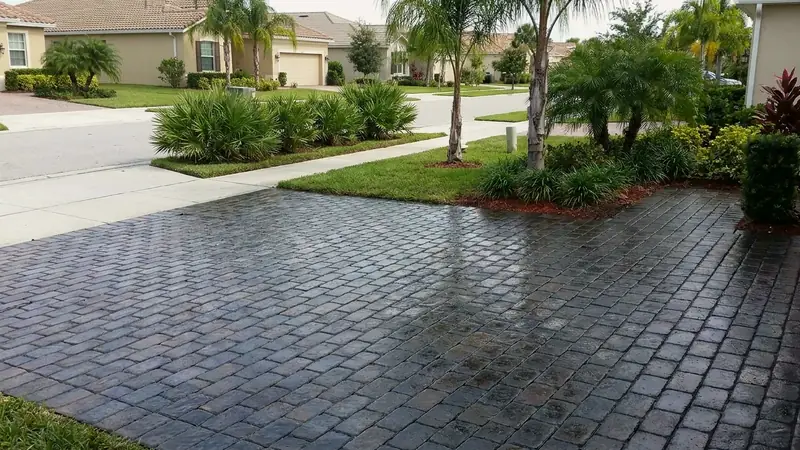
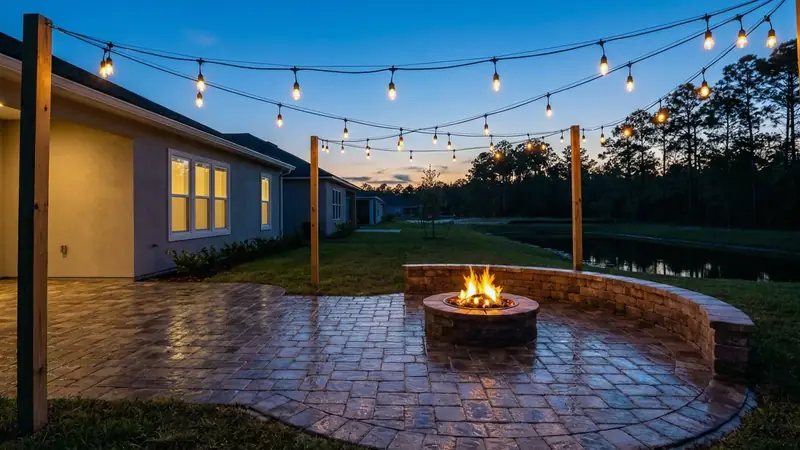
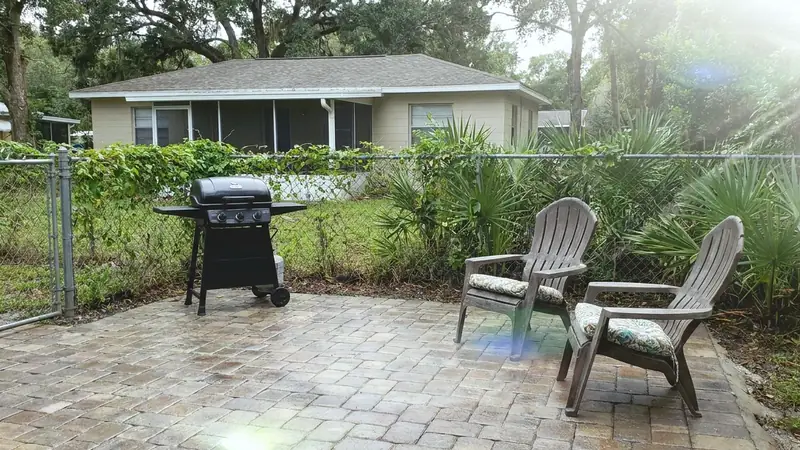
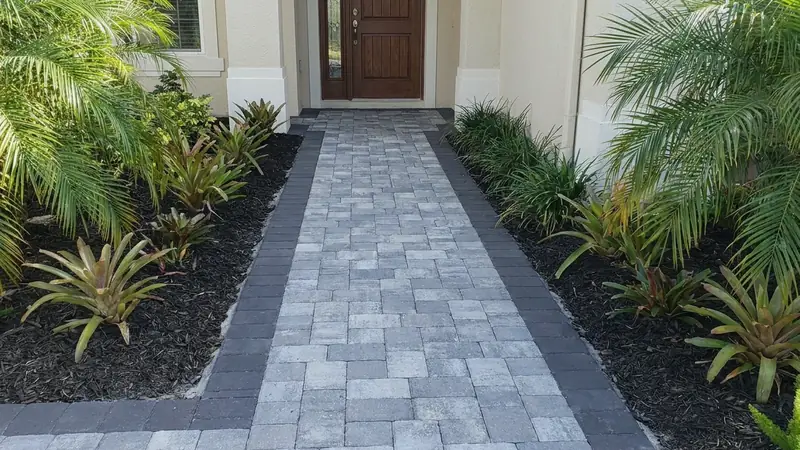
What do sealed pavers look like around Hudson?
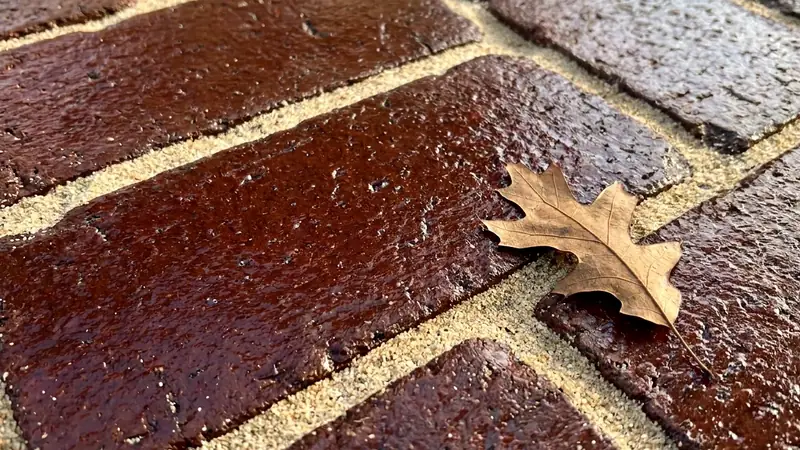
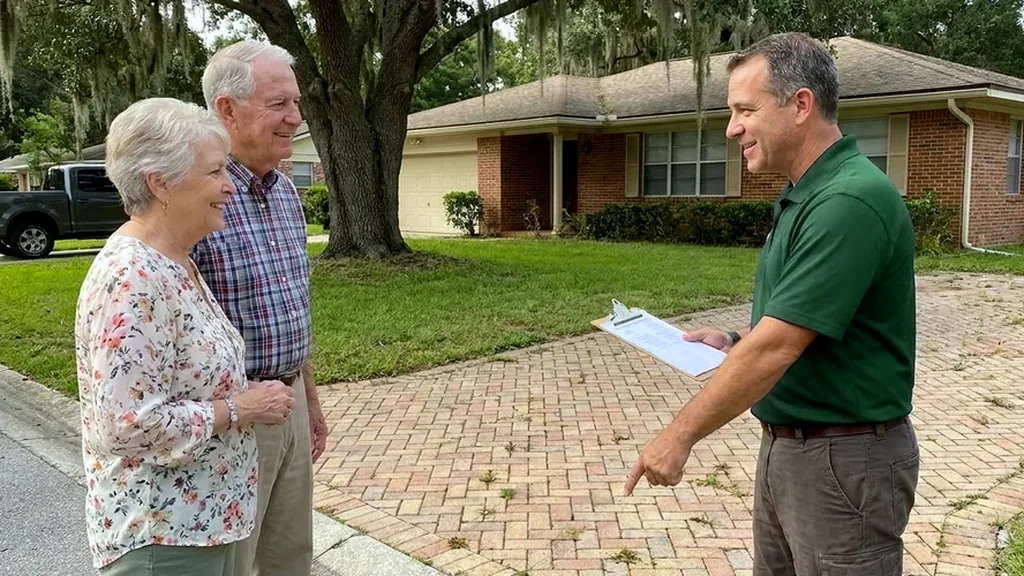
Why local matters in Hudson
A contractor who knows Hudson will ask how close your lot sits to the canals and whether water stands there after rain. That answer shapes the wash and the dry time. A company working from far away might skip that question. To reach a contractor who works west Pasco, call (352) 820-2319.
Local knowledge also covers the mix of older and newer homes. Port of Hudson lots date to about 1950, while inland streets are newer and sit farther from the water. Each calls for different care with rinse water near shrubs and screens. ask for a free estimate, and add your street plus about when the house went up.
Sprinkler water matters too. Most Florida wells carry iron, according to UF/IFAS, and iron leaves orange marks on pavers and walls. A local contractor knows to ask whether your irrigation runs on a well. Mention it when you call (352) 820-2319, with no obligation to hire anyone.
Does it help to hire someone who knows Hudson's waterfront history?
Yes, because Hudson grew up at a landing on the Gulf and still follows the water. Isaac Hudson moved his family to the coast in 1878, and a post office opened in his home. The Fivay Company shipped lumber by rail to Tampa until 1912, and then shrimping and fishing employed about half of the working men into the 1950s. If you live near the old waterfront, ask for a free estimate.
Strickland Memorial Park, known as Hudson Beach, was built in the 1960s and has about 1,900 feet of Gulf waterfront. Bayonet Point Hospital opened in 1981 and serves Pasco, Hernando and Citrus counties. Veterans Memorial Park and Engle Memorial Park hold the town's sports fields. If you live close to any of them, call (352) 820-2319 and say which street.
Frequently Asked Questions
What is the average cost to seal pavers in Hudson?
Price lists around the bay run $1 to $3 per square foot for the wash, new sand and sealer. Where a Hudson job lands depends on shade growth, old sealer and missing joint sand. Have the quote state the total area, then check the numbers against that range. A quote that lists each surface, such as the driveway, lanai and walkway, is easier to compare.
How much does it cost to have your pavers sealed on a canal lot in Hudson?
The same range applies, $1 to $3 per square foot, with the total set by how many square feet you have. A canal lot may add washing time if green film or rust has built up. Lanais and walkways are measured in with the driveway, and a free estimate shows you each number before you decide.
Are there drawbacks to sealing pavers in Hudson?
The main downsides are upkeep and timing. The coat wears with time and has to be redone, and glossy wet-look finishes show scuffs earlier than matte ones. It also needs a dry surface, so a damp canal-side lot or a stormy week can push the date back.
Is it better to spray or roll paver sealer in Hudson?
A common routine is to spray first and follow with a roller that levels extra sealer. Spraying covers big driveways quickly, and rolling gives control on edges and small areas. Ask the contractor which method goes with the product on your pavers. Overspray can reach screens, cars and plants, so ask how those get covered or moved.
How often should pavers be resealed in Hudson, Florida?
Company quotes for the time between coats tend to fall between two and five years. A bay-area paver company puts Gulf-front homes at the shorter end, citing salt air and wind-driven moisture. Sprinkler overspray and tire traffic also shorten the span on a Hudson driveway.
What kind of sealer is used on pavers in Florida homes like those in Hudson?
Contractors use water-based or solvent-based sealer, and the coat already on your pavers decides which one can go on. A solvent-based coat on the pavers means a water-based one is off the table. Get the product name and keep it handy. That note saves guessing when the next coat comes due, and it helps the next contractor pick a sealer that will bond.
Will sealing remove the rust spots on my Hudson pavers?
Rust is treated during the wash, before any sealer goes down. UF/IFAS notes that iron in well water causes orange streaks. Sealing over a stain would lock it in, so the stain comes off first or is pointed out in the estimate.
What happens if it rains after my pavers are sealed?
Sealer needs a dry surface going on, so contractors watch the forecast. Hudson's rainy season runs from late May to early October, and storms can pop up in the afternoon. If rain is likely, a good contractor moves the day instead of risking the coat.
Ready for a Free Estimate in Hudson?
Call (352) 820-2319 and tell us about your pavers.
Free, no obligation